Virtual vs. In-Person Keynote Speakers: Which Is Right for Your Event?
For the first two decades of professional event planning, the question "in-person or virtual?" didn't exist. Speakers came to your venue. That was the format.
Then the pandemic made virtual the only option, and the events industry discovered something unexpected: virtual keynote speakers could be genuinely effective, not just adequate, not just passable, but capable of producing audience outcomes that rivaled in-person delivery when done well.
Now, in 2026, the question is real, and it's strategic. Virtual, in-person, and hybrid are all legitimate options for almost any event. The decision between them isn't about which format is better; it's about which format is right for your specific event, your specific audience, and your specific goals.
This guide gives you the decision framework to make that call confidently, the specific criteria that favor each format, the cost differences to factor into your budget, and the vetting standards that ensure your virtual speaker delivers a professional experience, not a polished Zoom call.

John Doe
Chief Marketing Officer at eSpeakers
Find virtual and in-person speakers in the same search, free.
The eSpeakers Marketplace lets you filter by format (virtual, in-person, or hybrid), fee range, topic, availability, and CVP certification status. Compare your options side by side before making the format decision.
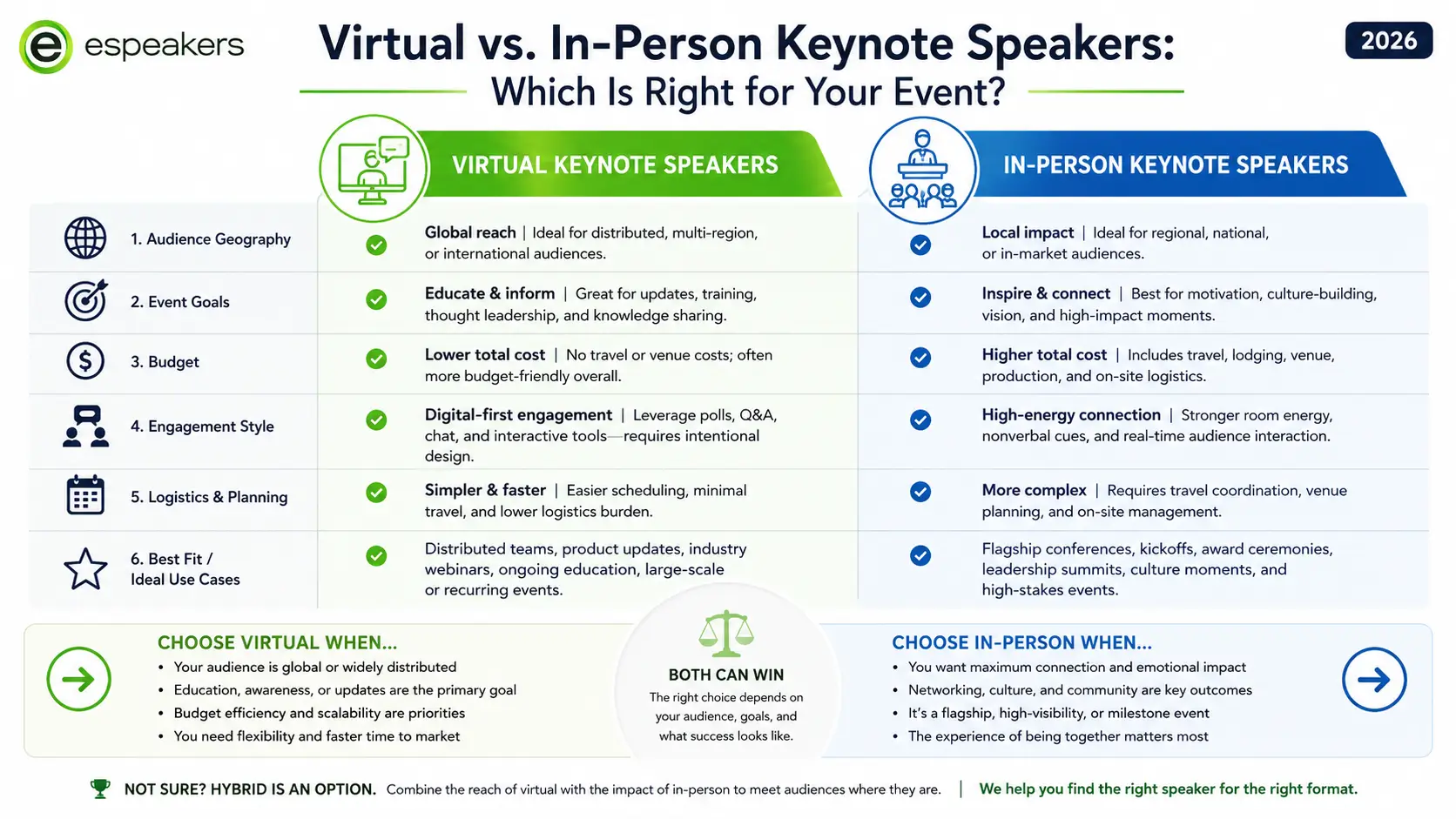
The Landscape Has Changed Permanently
Before the comparison framework, a perspective reset is useful.
Virtual keynote speakers are no longer a contingency plan. They’re a permanent, strategic option that experienced planners now evaluate on the same terms as in-person speakers, not as a compromise when in-person isn’t available, but as a genuinely different format with its own advantages, its own audience experience, and its own set of requirements for doing it well.
The data support this shift. More than 123 million hybrid and virtual events took place globally in 2025, according to PCMA’s research on hybrid and virtual events. Virtual delivery formats have become a permanent feature of the corporate events landscape rather than a pandemic contingency. Corporate audiences have become comfortable, in many cases, preferred consumers of professional virtual content. Meeting planners now regularly choose virtual speakers not because they have to, but because the format serves their event better.
At the same time, in-person hasn’t lost its power. There are event types and audience experiences that the physical room still produces better than any screen can replicate. Networking energy, collective emotional experience, the physical presence of a speaker commanding a ballroom, these qualities of in-person events are real and worth preserving when they serve your goals.
The right answer is not “virtual is as good as in-person” or “in-person is irreplaceable.” The right answer is: it depends on what your event needs to accomplish, and this article gives you the framework to make that determination.
Part 1: What In-Person Keynote Speakers Do Best
The Unreplicable Qualities of Physical Presence
There are specific elements of the in-person speaking experience that virtual delivery cannot fully reproduce, regardless of how excellent the speaker’s virtual setup or how capable their delivery skills.
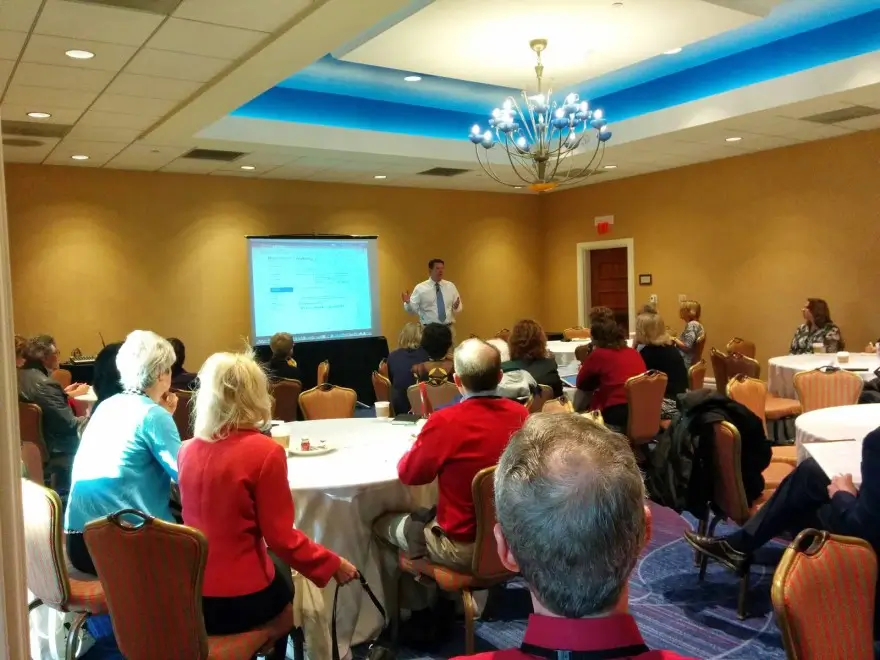
Room energy and collective experience. When 500 people are in the same ballroom, and a speaker lands a moment, a punchline that makes the room erupt, a story that creates visible silence, an insight that generates audible agreement, the collective response amplifies the individual experience in a way that doesn’t transfer through a screen. The energy is shared and felt simultaneously. This is the quality that makes great in-person keynotes feel like events rather than presentations.
Physical presence and authority. A speaker physically occupying a stage carries a different type of authority than a speaker on a screen, however excellent their virtual setup. The spatial scale of a large stage, the physical energy of a speaker moving through space, the ability to read the room in three dimensions and adjust in real time, these are qualities of in-person delivery that the most accomplished virtual speakers can partially compensate for but cannot fully replicate.
Spontaneous audience interaction. The best in-person speakers read micro-signals from their audience, a laugh that starts in one section and spreads, a moment of visible skepticism in the front row, the body language shift when content lands. They adjust in response to these signals in ways that don’t require the mechanical interventions (polls, chat, raised hands) that virtual speakers need to build interaction into their programs.
Networking and relationship-building context. In-person events create the conditions for relationship-building between attendees before, during, and after the keynote, conversations in the hallway, and connections made over the shared experience of a powerful presentation. Virtual events can facilitate networking, but the serendipitous, ambient connection that in-person events create naturally is genuinely harder to design virtually.
When In-Person Is the Right Choice
In-person keynote speakers deliver the strongest results when:
- The event is primarily about collective experience. Annual all-hands meetings, company milestone celebrations, and major conference openings, where the shared moment matters as much as the content
- The audience needs energy and re-commitment. Sales kickoffs, team rallies, and cultural alignment events where physical presence amplifies the emotional impact
- The speaker is part of the event’s entertainment or prestige value. When the speaker’s name is a meaningful draw for attendance, and the in-person encounter with them is the value
- Networking and relationship-building are key event objectives. When attendee connections matter as much as speaker content
- The topic requires tactile or experiential elements. Workshops, demonstrations, or training programs that benefit from physical materials and in-person facilitation
Part 2: What Virtual Keynote Speakers Do Best
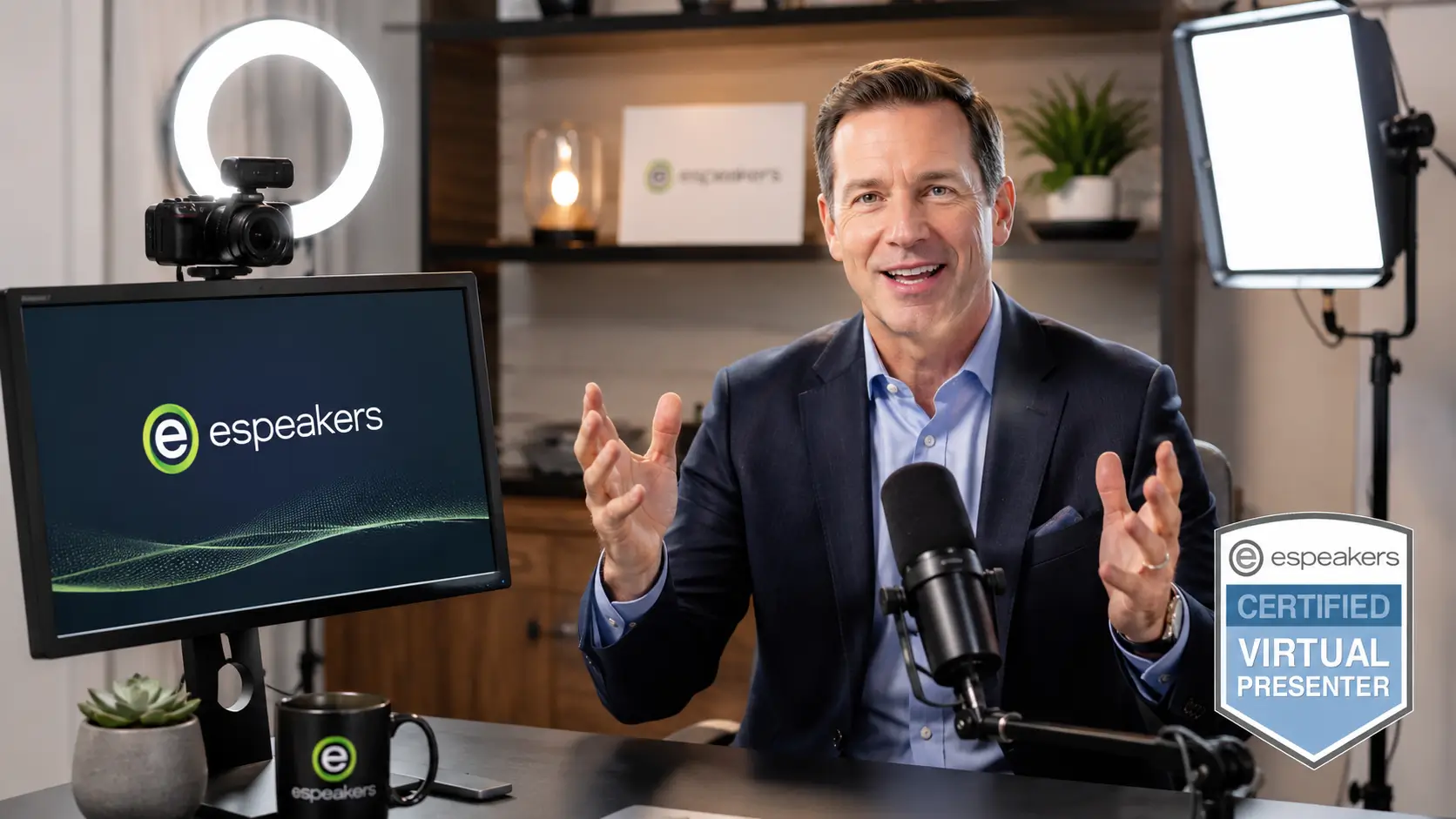
The Genuine Advantages of Virtual Delivery
Virtual keynote speakers don’t just approximate in-person; they have genuine advantages that in-person delivery can’t match.
Access to the best speaker regardless of geography. A speaker based in New York can be equally available for a conference in Austin, Stockholm, or Singapore. The geographic constraint that limited speaker selection to candidates within a practical travel radius is permanently removed. For organizations that previously had limited access to top-tier speakers due to location, budget, or scheduling, virtual delivery opens the entire professional speaking market.
Cost efficiency without sacrificing quality. Virtual keynote speaker cost is typically 20–50% below in-person rates, because travel and accommodation are eliminated. A speaker who would require $18,000 in-person, $15,000 fee plus $3,000 in travel, may be available for $10,000–$12,000 virtually. That differential can fund additional speakers, better production quality, or simply remain in the event budget.
Multiple shorter sessions instead of one long keynote. Virtual delivery is more effective in shorter segments, 20–45 minutes, than the 60–90 minute in-person keynotes that are standard conference format. This constraint is actually a feature: it opens the possibility of bringing in multiple speakers across a virtual day for shorter, focused sessions, rather than asking one speaker to sustain in-person keynote length in a virtual format.
Broader audience reach. Virtual events remove the attendance constraints of physical space. A speaker who addresses 300 people at an in-person conference can address 3,000 at a virtual one. For organizations with distributed, global, or large teams, virtual formats dramatically increase the percentage of the organization that can access the speaker’s content.
Recorded content that extends the event’s value. Virtual keynotes are more easily recorded and distributed than in-person events, creating a content asset that extends the speaker’s impact beyond the live event. Recording rights are a standard consideration in virtual speaker contracts. Budgeted appropriately, they can extend the ROI of the speaking investment significantly.
Accessibility and inclusion. Virtual attendance removes physical accessibility barriers, travel constraints, and schedule constraints that prevent some audience members from attending in-person events. For organizations committed to inclusive access, virtual formats are a meaningful equity improvement.
When Virtual Keynote Speakers Are the Right Choice
Virtual delivery delivers the strongest results when:
- The audience is geographically distributed. Teams or associations spread across multiple cities, regions, or countries, where a single physical venue would exclude many members.
- Budget constraints limit the speaker field. Virtual keynote speaker cost is lower, opening access to speakers who would be cost-prohibitive in-person.n
- Multiple shorter sessions serve the event better than one long keynote. Particularly for educational conferences, training events, and virtual summits with multiple topic tracks
- Content density matters more than energy. Highly structured, information-dense content often translates better to virtual delivery than high-energy motivational formats.
- Attendance numbers matter,r and venue size is a constraint. Virtual removes the capacity ceiling of a physical room
- Flexibility and last-minute booking are required. Virtual speakers can often be confirmed with a shorter lead time than in-person engagements that require travel logistics.
Part 3: The Hybrid Question
Hybrid events, where some attendees are in a physical venue, and others attend virtually, present the most complex speaker format decision, because you’re simultaneously managing two distinct audience experiences that have different needs
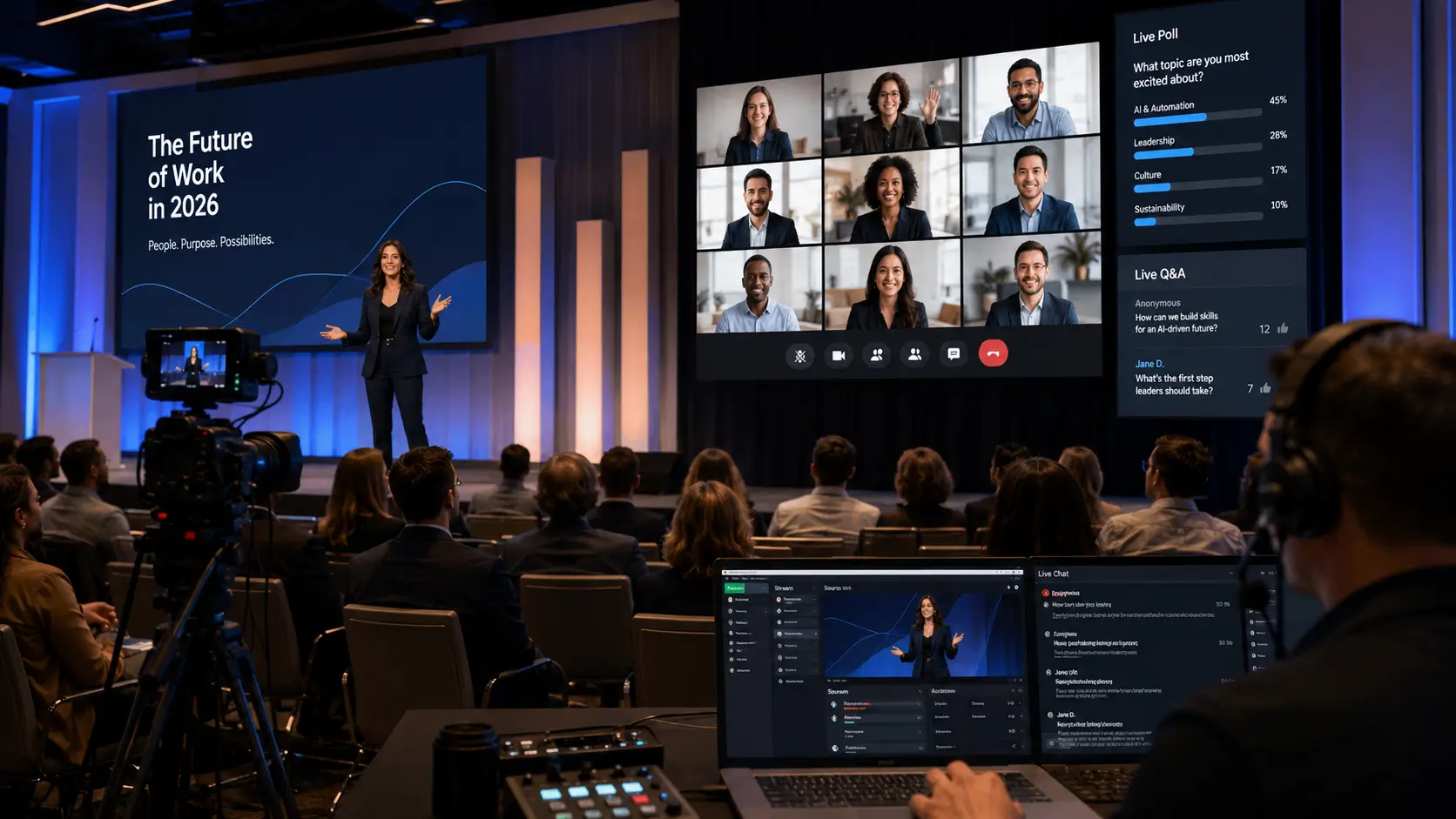
The Hybrid Speaker Challenge
The fundamental challenge of hybrid events is that a speaker optimized for an in-person audience doesn’t automatically serve the virtual audience well, and vice versa. A speaker delivering to 300 people in a ballroom creates an in-person experience driven by room energy, physical presence, and collective response, and the virtual audience watching on a screen often feels like they’re watching someone else’s event rather than participating in their own.
The reverse is also true: a speaker who is exceptional at virtual engagement, building interaction through polls, chat, breakout prompts, and direct-to-camera delivery, may find their virtual engagement techniques disruptive or awkward in a room full of physical attendees who experience them differently.
Approaches That Work for Hybrid
Two distinct content delivery modes. The speaker delivers to the physical room as an in-person keynote, and the event organization provides a dedicated virtual host who manages the virtual audience’s experience, facilitating chat, running polls, and bridging between the room and the virtual attendees. The speaker focuses on the room; the virtual host focuses on the screen. This division of labor produces a better experience for both audiences than asking the speaker to serve both simultaneously.
“Virtual-first” hybrid design. The speaker is optimized for virtual delivery, and the physical room is designed as a viewing experience; attendees in the room watch the speaker on a large screen rather than experiencing them physically present on stage. This approach works best when the virtual audience significantly exceeds the in-person audience, and when the content lends itself to virtual delivery.
Pre-recorded keynote with live Q&A. The speaker records the primary content before the event, which is played as a polished production for both audiences. The speaker then joins live for a moderated Q&A session that can serve both virtual and in-person audiences. This approach removes format tension from the main content delivery and focuses the live interaction where the speaker can serve both audiences simultaneously.
Full in-person priority with virtual rebroadcast. The speaker delivers an in-person keynote for the physical audience, and the session is simultaneously streamed to virtual attendees with minimal adaptation. Virtual attendees experience the event more as observers than participants. This works when the in-person audience is primary, and the virtual audience is secondary, but it sets clear expectations that the experience won’t be optimized for virtual consumption.
Part 4: The Decision Framework, Which Format Is Right for Your Event?
Use this decision framework to evaluate the right format for your specific event. Work through each factor and weigh it against your event’s specific context.
Factor 1: Audience Geography and Access
Favor in-person when:
- Your audience is in one city or region, and travel is practical for the majority
- The event’s other elements (workshops, networking, meals, exhibits) require physical presence anyway
- Attendance at the physical event is already confirmed and logistically feasible for your audience
Favor virtual when:
- Your audience is distributed across multiple cities, regions, or countries
- A significant portion of your audience would be excluded by travel or accommodation requirements
- The event’s other elements are already virtual or asynchronous
The diagnostic question: What percentage of your intended audience can realistically attend in person? If the answer is below 70–80%, the case for virtual or hybrid strengthens significantly.
Factor 2: Event Goal Type
Favor in-person when:
- The goal is energy, motivation, or collective re-commitment, emotional outcomes that benefit from room amplification
- Relationship-building between attendees is a key event objective
- The speaker’s physical presence is part of the value proposition (celebrity draw, authority signaling)
- The event is a celebration, milestone, or cultural moment
Favor virtual when:
- The goal is content delivery, skill development, or information transfer, outcomes that don’t require room energy
- The audience size makes in-person impractical or cost-prohibitive
- Multiple focused content sessions are more valuable than one sustained keynote
- The event is programmatic rather than experiential
The diagnostic question: Would achieving this event’s goals require the audience to be in the same physical space as each other, not just in the same space as the speaker?
Factor 3: Content Type and Delivery Style
Favor in-person when:
- The speaker relies on room energy, physical movement, and crowd interaction as primary engagement tools
- The content involves demonstration, physical activity, or materials that benefit from in-person facilitation
- Humor-forward, high-energy delivery styles that depend on room amplification for their full effect
Favor virtual when:
- The content is information-dense, structured, and highly teachable in a focused format
- The speaker has explicitly designed their programs for virtual delivery, not just adapted in-person content
- Interactive elements (polls, breakout rooms, digital resources) are central to the session design
The diagnostic question: Does this speaker’s program depend on the physical room for its effectiveness, or is it designed to work equally well in either format?
Factor 4: Budget
Favor in-person when:
- Your budget accommodates the speaking fee plus $1,500–$3,000 in typical travel and accommodation costs
- The premium of in-person delivery is justified by the event’s goals and audience profile
- The total in-person cost is within your approved budget without requiring trade-offs elsewhere
Favor virtual when:
- Your budget is constrained, and the 20–50% cost reduction of virtual delivery is meaningful
- The travel cost savings from virtual delivery open access to a higher-tier speaker than you could otherwise afford
- Virtual delivery allows you to invest in multiple speakers rather than one expensive in-person engagement
Cost comparison illustration:
Scenario | In-Person Cost | Virtual Cost | Difference |
Mid-tier speaker ($15,000) | $17,500–$18,500 (with travel) | $9,000–$12,000 | $5,500–$9,500 savings |
Established speaker ($25,000) | $27,500–$29,000 (with travel) | $15,000–$20,000 | $7,500–$14,000 savings |
Top-tier speaker ($40,000) | $43,000–$46,000 (with travel) | $25,000–$32,000 | $11,000–$21,000 savings |
Factor 5: Timing and Urgency
Favor in-person when:
- You’re booking 4–12 months in advance and have time for the speaker to arrange travel logistics
- Your event date is flexible enough to accommodate a speaker’s travel schedule
Favor virtual when:
- Your timeline is compressed, 4–8 weeks or less, and travel logistics for in-person are difficult to arrange
- You need to book a speaker at the last minute for a time-sensitive event
- Your event date is fixed and overlaps with the speaker’s other travel commitments
The diagnostic question: How much lead time do you have, and do in-person logistics create scheduling complications that virtual would eliminate?
Part 5: Vetting Virtual Keynote Speakers, The Standard Has Changed
Not every speaker who offers virtual delivery is set up for professional virtual delivery. The difference between a speaker who presents competently on Zoom and a speaker who delivers a genuinely virtual keynote experience, technically polished, engagement-designed, platform-confident, is significant enough to affect your audience’s experience and your event’s outcomes.
What Professional Virtual Delivery Requires
Equipment:
- External camera (not a built-in laptop webcam) producing a clear, high-definition image
- External microphone eliminates the echo, background noise, and inconsistent volume that built-in laptop mics produce
- Professional lighting setup, with a minimum of a key light in front of the speaker, eliminating the backlit-window silhouette problem that plagues amateur virtual setups
- Reliable, fast internet connection with a documented backup plan for connection failure
Environment:
- Noise-free presenting space, no ambient household sounds, background activity, or unpredictable interruptions
- Professional background, either a clean physical background or a high-quality virtual background that looks appropriate, not obviously artificial
- Consistent space that the speaker controls and can replicate for every virtual engagement.
Platform competence:
- Familiarity with the specific platform your event uses, Zoom, Microsoft Teams, WebEx, Hopin, or others
- Ability to share screen seamlessly while remaining visible on camera
- Comfort with virtual interaction tools, polls, breakout rooms, chat management, Q&A
- A documented plan for technical contingencies
Delivery skills specific to virtual:
- Camera eye contact, looking directly at the camera lens, not at their own image on the screen
- Energy calibration for virtual, awareness that energy levels effective in a physical room may fall flat on screen, and adjustment to compensate
- Vocal variety and pacing adjusted for digital audio versus live acoustics
- Designed interaction points rather than assuming the live-event spontaneity that doesn’t transfer to virtual
The CVP: The Credential That Verifies Virtual Readiness
The Certified Virtual Presenter (CVP) certification, administered by eSpeakers, is the speaking industry’s verified standard for virtual delivery readiness. It answers the specific question planners need answered before booking a virtual keynote speaker: has this speaker’s setup, environment, and platform competence been independently verified by a trained evaluator?
How the CVP assessment works: The speaker undergoes a live, 30-minute session with an eSpeakers certifier on the same type of video conferencing platform they’d use for actual presentations. The certifier evaluates three areas:
- Equipment: Camera clarity and framing, microphone audio quality, and lighting setup
- Environment: Noise-free, distraction-free, professional presenting space
- Platform skill: Comfort and competence with their primary virtual delivery platform
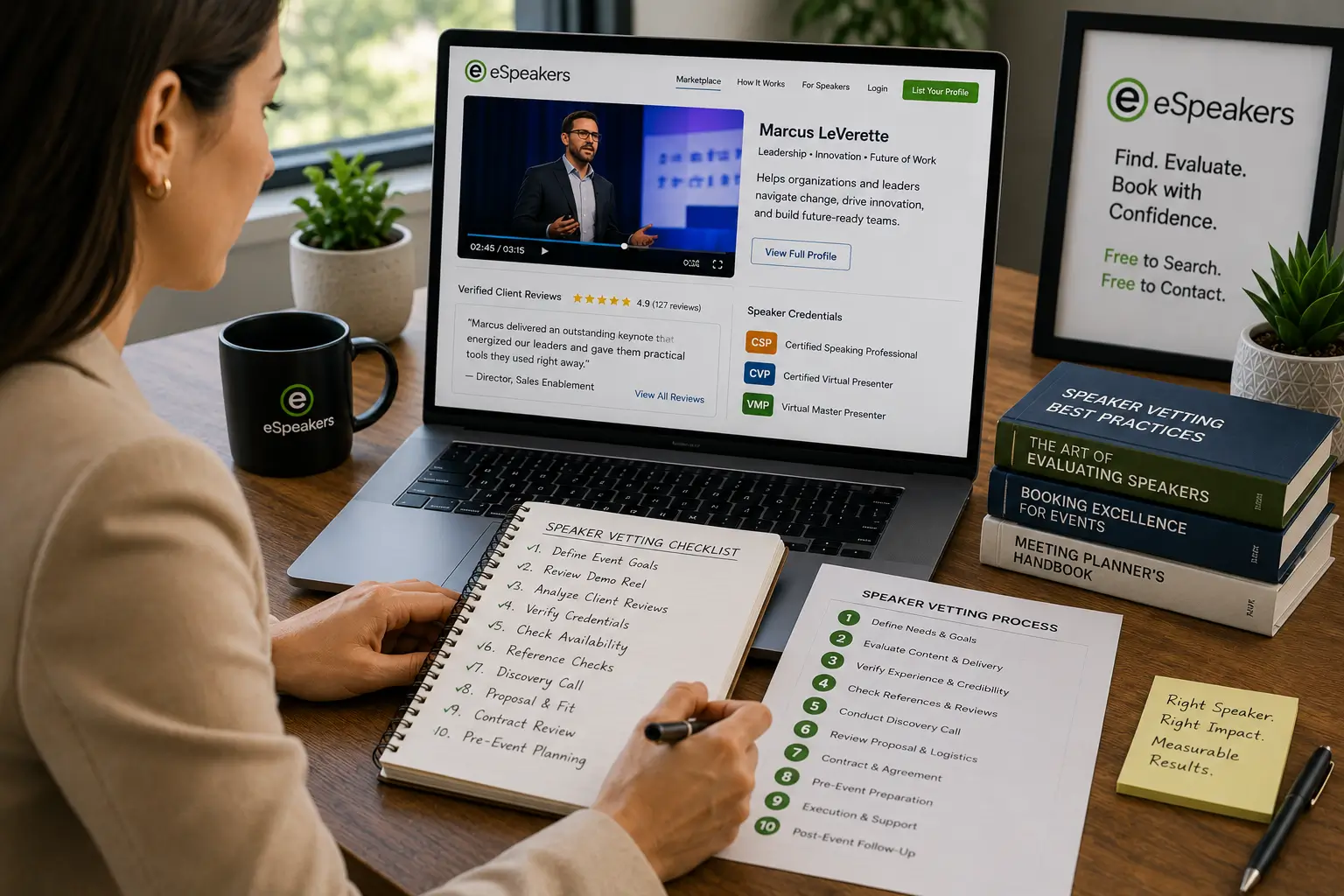
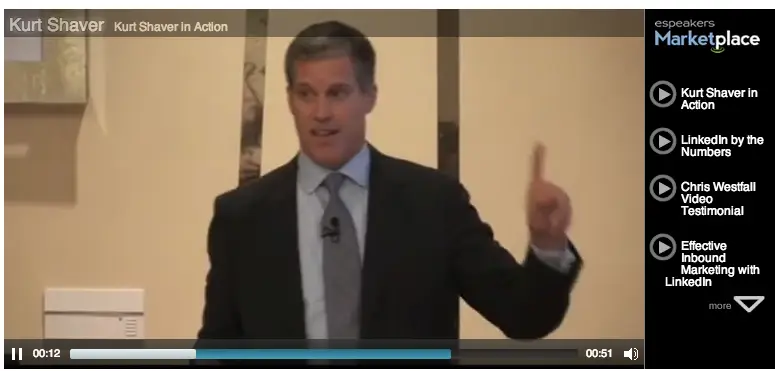
The assessment produces a virtual proof video, a 30–60 second recording of the speaker presenting on camera, properly lit and clearly audible, attached to their eSpeakers profile. This proof video is visible to every planner who browses the profile, giving you direct visual evidence of what your virtual audience will see before you contact the speaker.
The CVP is recognized by: Meeting Professionals International (MPI), SMART Meetings, and the Senior Professional Industry Network (SPIN), the organizations whose members are the planners booking virtual speakers.
On the eSpeakers Marketplace: The CVP badge appears directly on the speaker’s profile and enables a dedicated search filter. When you filter for CVP-certified speakers in the Marketplace, every speaker in the results has been independently assessed for virtual delivery readiness, eliminating the professional risk of discovering a speaker’s inadequate setup after booking.
The VMP: Advanced Virtual Delivery Mastery
For high-stakes virtual events where the speaker’s delivery quality is a central part of the event’s value proposition, the Virtual Master Presenter (VMP) credential indicates a higher level of virtual delivery mastery. Created by Rebecca Morgan, CSP, and administered through eSpeakers, the VMP is earned through 15 hours of live instruction and formal assessment across five competency domains: AV setup, virtual delivery, engagement, slide design and use, and technical ability.
Speakers with both the CVP and VMP display a two-badge credential stack on their eSpeakers profile, the most comprehensive virtual presenter credential combination available.
The Red Flags to Watch For
When evaluating virtual keynote speakers who are not CVP-certified, watch specifically for:
- No virtual delivery footage in their reel, a speaker who offers virtual but has no virtual delivery footage doesn’t have footage that shows their virtual quality
- Virtual footage using a built-in laptop camera, immediately visible from image quality and framing, signals insufficient investment in virtual setup.
- Poor audio quality in any available footage, echo, inconsistent volume, or background noise that a basic external microphone would eliminate
- No mention of interactive elements, a virtual keynote without planned interaction is a broadcast, not an engagement
- Resistance to a pre-event tech check, professional virtual speakers expect and welcome a technical rehearsal 48–72 hours before the event.
Part 6: Making Virtual Keynotes Work, The Planner’s Responsibility
Choosing a great virtual keynote speaker is half the work. Making the virtual keynote achieve its potential requires preparation from the planner’s side that in-person events don’t require to the same degree.
Prepare Your Audience Differently
Virtual audiences are more distractible than physical audiences; they’re in their home office, next to their phone, with email open in another tab. The engagement gap has to be closed on both sides: the speaker through excellent virtual delivery design, and the planner through intentional audience preparation.
Effective virtual audience preparation:
- Brief the audience on what to expect, the topic, the format, and what they’ll be able to do after the session
- Give them a single pre-session question to hold: “Before the session, write down the most pressing challenge you’re currently facing in [topic area].” This primes attention and increases the personal relevance of the speaker’s content.
- Create technical access clarity, send platform access links, and basic tech guidance 48 hours before, not 30 minutes before
- Set the expectation for active participation, camera on, chat engaged, polls expected
Set Up the Technical Environment
For your organization’s side:
- Test the platform end-to-end before the event, including screen sharing, recording, and any interactive features you’ll use
- Have a dedicated technical moderator whose only job is managing the technical environment, separate from whoever is managing the event’s programmatic flo.w
- Provide a backup contact method for the speaker if platform issues arise during the session.
- Have a contingency plan for the most likely failure scenarios: speaker internet outage, platform failure, and recording malfunction.n
For the speaker:
- Confirm their CVP certification or conduct your own technical pre-check 48–72 hours before the event, not the morning of
- Confirm platform compatibility: if your event uses Hopin and the speaker primarily uses Zoom, confirm they have Hopin experience or schedule additional preparation time.
- Confirm their backup plan for internet failure: a mobile hotspot, a backup device, or a short-delay protocol if their primary connection drops.
Design the Session for the Format
Virtual keynote design is different from in-person keynote design. An in-person keynote can sustain 60–75 minutes on the energy of a room. A virtual keynote performs better at 20–45 minutes with deliberate interaction points built in.
Work with your speaker to design the virtual session specifically for the format:
- Planned interaction points every 8–12 minutes, not optional add-ons but core session design elements
- Chat prompts that the speaker references and responds to, not ignored decoration
- A session structure that accounts for the virtual attention curve rather than assuming in-person attention patterns apply
- A clear, actionable close: What specifically should attendees do immediately after the session ends?
Part 7: The Hybrid Checklist
If you’ve decided on a hybrid format, a speaker delivering to both a physical audience and a simultaneous virtual audience, use this checklist to manage the additional complexity.
Speaker preparation:
- Confirmed speaker has experience with hybrid delivery, specifically, not just in-person or virtual separately
- Speaker briefed on the split audience composition: how many in-person, how many virtualThe speakerr has designed specific interaction moments that work for both audiences simultaneously
- Speaker’s virtual setup verified even for a hybrid in-person delivery (their camera feed to virtual attendees must be professional quality)
Technical setup:
- Dedicated camera positioned to capture the speaker appropriately for the virtual audience (not just the ballroom camera used for in-room projection)
- Audio feed from the room is routed to the virtual platform at the appropriate quality level
- Virtual audience view is managed separately from the in-room projection
- Interaction tools (polls, chat, Q&A) configured and tested for virtual audience participation
- Technical moderator assigned specifically to manage virtual audience experience
Audience experience design:
- Virtual attendees have been told how they’ll be able to participate, not just that a session will be streamed
- Virtual Q&A or chat is surfaced to the speaker during the session, not silently read by an invisible moderator
- Virtual attendees have a reason to have their camera on, if feasible
- Virtual experience has been designed, not just the in-person experience, streamed to a secondary audience
Searching for Virtual Keynote Speakers on eSpeakers Marketplace
The eSpeakers Marketplace makes virtual speaker evaluation efficient with tools specifically designed for the unique requirements of virtual bookings.
The virtual format filter surfaces only speakers who have confirmed availability for virtual engagements, eliminating candidates who are in-person only before you invest evaluation time.
The CVP credential filter narrows the virtual speaker pool to those whose equipment, environment, and platform competence have been independently verified. For any high-stakes virtual event, filtering for CVP-holders is the fastest risk-reduction step in your evaluation process.
Virtual proof video on every CVP-certified speaker profile gives you a direct view of what your virtual audience will see, camera quality, framing, lighting, and audio, before you contact the speaker.
Fee range filter lets you apply your virtual budget specifically, and since virtual keynote speaker cost is 20–50% below in-person rates, your budget may stretch further in the virtual pool than you’d expect.
Availability calendar shows live availability for virtual engagements, particularly useful for the compressed timelines that often accompany virtual event planning.
The Format Decision at a Glance
Decision Factor | Favor In-Person | Favor Virtual |
Audience geography | Local/regional, can travel | Distributed, remote, or global |
Event goal | Energy, motivation, collective experience | Content, skills, information transfer |
Audience size | Venue-manageable (under 500 for most) | Large or distributed attendance |
Budget | Covers fee + travel | Constrained; virtual = 20–50% savings |
Networking importance | High | Low to moderate |
Session length | 45–90 minutes standard | 20–45 minutes optimal |
Booking timeline | 4+ months lead time available | 4 weeks to 4 months; last-minute feasible |
Relationship/energy | Collective room experience required | Content quality primary |
Geographic flexibility | Speaker located reasonably nearby | Best speaker regardless of location |
FAQ
Virtual keynote speakers can be equally effective as in-person speakers for content delivery, skill development, and information transfer goals. Where in-person maintains a genuine advantage is in collective energy, room amplification, and networking-based outcomes. The question isn’t which is better, it’s which format is right for your specific event goals, audience, and context. For events where geographic access, budget efficiency, and content density are priorities, virtual keynote speakers often produce equivalent or superior outcomes at significantly lower cost.
Virtual keynote speaker cost is typically 20–50% lower than the same speaker’s in-person fee, because travel and accommodation costs are eliminated. A speaker who charges $15,000 in-person may charge $8,000–$12,000 for the same content delivered virtually. Some speakers with significant virtual production investments price virtual closer to their in-person rate. The total cost difference including travel is often larger: an in-person engagement at $15,000 plus $2,500 in travel costs $17,500, while the same speaker’s virtual engagement at $10,000 produces over $7,500 in savings.
The Certified Virtual Presenter (CVP) is a credential administered by eSpeakers that independently verifies a speaker’s equipment quality, presenting environment, and platform competence for virtual delivery. It is earned through a live 30-minute assessment with an eSpeakers certifier and is recognized by MPI, SMART Meetings, and the Senior Professional Industry Network (SPIN). The CVP badge on a speaker’s eSpeakers profile tells planners the speaker’s virtual setup has been independently assessed, reducing the risk of discovering inadequate technical quality after booking. CVP-certified speakers also have a virtual proof video attached to their profile showing exactly what their virtual setup looks like on camera.
Use the eSpeakers Marketplace format filter to search specifically for virtual keynote speakers. Combine this with the CVP credential filter to narrow results to speakers whose virtual setup has been independently verified. Apply your fee range filter to work within your budget, virtual speakers are typically 20–50% less than in-person. Evaluate shortlisted speakers on their virtual delivery footage specifically (not just in-person stage footage), and look for verified client reviews that mention virtual event experience. Searching and contacting speakers on eSpeakers Marketplace is free for event planners.
Key criteria for virtual keynote speakers include: professional equipment (external camera, external microphone, dedicated lighting, not a laptop webcam), a controlled presenting environment free from background noise and distractions, platform competence with your specific virtual event platform, and a demonstrated track record of engagement design for virtual delivery rather than in-person content adapted to screen. The CVP badge on an eSpeakers profile tells you equipment, environment, and platform competence have been independently verified. Also look for verified client reviews specifically mentioning virtual event performance, and virtual-specific footage in their demo reel.
Virtual keynotes are most effective at 20–45 minutes with deliberate interactive elements built in at regular intervals, not adapted from a 60–90 minute in-person format. Virtual attention spans are shorter than in-person attention spans, and the engagement tools available in virtual formats (polls, chat, breakout rooms) work best in shorter, structured segments rather than as add-ons to a long-format presentation. Work with your virtual speaker to design a session specifically for the virtual format and your audience’s specific context.
A virtual keynote speaker delivers their presentation entirely online, both the speaker and the audience are remote. A hybrid keynote involves some combination of in-person and virtual participants: typically, either the speaker is physically present at a venue with some attendees while others attend virtually, or the speaker delivers virtually while attendees are in a physical viewing room. Hybrid formats are the most technically complex to execute well, because they require serving two distinct audience experiences simultaneously. Speakers who specialize in hybrid delivery explicitly design their programs to serve both audiences, not just prioritize the in-room experience with a camera pointed at them.
Yes. Virtual keynote speakers typically offer more last-minute booking flexibility than in-person speakers, because there are no travel logistics to arrange. The availability filter on the eSpeakers Marketplace lets you search for virtual speakers who are open for your specific event date, even if that date is 2–4 weeks away. For truly urgent bookings, the eSpeakers team is also available by phone to help identify available virtual speakers who match your criteria on short notice.
Find Your Virtual Keynote Speaker, Free on eSpeakers
The eSpeakers Marketplace gives you the filter tools specifically designed for virtual speaker search: format filter, CVP credential filter, fee range filter, availability calendar, and virtual proof videos on every certified speaker profile. All free to search and browse.
→ Browse Virtual Keynote Speakers for Events
→ Find CVP-Certified Virtual Presenters
→ Search Budget-Friendly Virtual Keynote Speakers
→ Find Motivational Speakers for Virtual Events
→ Find Corporate Speakers for Virtual Events
This article was written for meeting planners and event professionals who are actively deciding between virtual, in-person, or hybrid keynote speaker formats. The eSpeakers Marketplace includes virtual format filters, CVP credential filters, and virtual proof videos on certified speaker profiles, all free to search.
Last updated: April 2026
Joe Heaps, Chief Marketing Officer at eSpeakers
Joe Heaps is the Chief Marketing Officer at eSpeakers and is responsible for creating and accelerating the company's sales & marketing strategies. He is focused on driving the company's vision of helping organizations and individuals improve in substantial, long-term ways. He believes it happens when the perfect speaker is in front of the right audience. Over 25 years in the industry, Joe’s strategic vision and leadership have propelled eSpeakers to the leading software platform for speakers, coaches, and experts.
Joe Heaps
Chief Marketing Officer, eSpeakers
Latest Articles

Related Articles