The ROI of Speaker Certifications: Why Clients Pay More for Credentialed Speakers
Meeting planners pay more for credentialed speakers because credentials reduce the planner's professional risk, and risk reduction has a dollar value in every booking decision. When a planner recommends a speaker to their leadership team and that speaker underdelivers, the planner wears it. A verified credential transfers a portion of that risk onto an institution's credentialing process, converting a judgment call ("I think this person is good") into a defensible recommendation ("this speaker has been independently assessed against documented professional standards").
That mechanism, not prestige, not letters after a name, but actual risk transfer, is why credentialed speakers consistently command higher fees, appear on more shortlists, and win bookings faster than uncredentialed peers at equivalent experience levels. Understanding it turns "you should get your CSP" from vague industry advice into a concrete business case you can evaluate against your own career stage, booking patterns, and revenue goals. This article makes that case, then connects it to the specific credentials, CVP, VMP, CSP, that produce the clearest, most measurable return for professional speakers in 2026.

John Doe
Chief Marketing Officer at eSpeakers
The Planner's Real Problem
Meeting planners operate in a career environment where one bad speaker can damage them professionally, and one great speaker makes them look like a genius. That asymmetry shapes almost every decision they make during the speaker selection process.
Consider what's actually at stake when a corporate event planner books a keynote speaker for a company's annual leadership summit. They're committing a meaningful budget line; speaker fees typically represent 15–25% of the total event cost. They're making a recommendation to leadership. They're setting attendee expectations in advance marketing. And they're personally accountable for whether the morning's centerpiece delivers or disappoints.
If the speaker is outstanding, the planner gets credit for a great event and builds credibility with the organization. If the speaker is mediocre or worse, wrong for the room, unprepared, technically sloppy on a virtual keynote, or in the worst case, unprofessional, the planner wears it. Not the speaker. The planner.
This risk profile is why meeting planners are, as The Speaker Lab put it, "incredibly conscious of risk mitigation." A speaker without any verifiable credentials or track record represents a risk that the planner has to personally underwrite. Every credential, every independently verified signal that this speaker has done the work, met the standard, and been evaluated by a third party, is a transfer of some portion of that risk from the planner's professional reputation onto an institution's credentialing process.
This is the mechanism. Credentials don't make planners want to pay more because they admire the letters. Credentials make planners willing to pay more because they can trust the letters, and because that trust reduces the exposure they're personally taking on by recommending you.
Brad Plumb, CMP (Certified Meeting Professional), summarized it from the planner side as directly as it can be stated: "CSP is an insurance policy toward the meeting planner's success." Another CMP planner wrote: "I believe strongly in designations. It says you are committed to the profession. Yes, CSP does make a difference in selecting speakers."
These aren't generic endorsements. They're professional risk managers describing a credential that reduces their personal exposure. The premium planners pay for credentialed speakers is, at its core, an insurance premium.
How the Risk Transfer Works in Practice
The risk-reduction mechanism plays out at three specific stages of the booking process.
The Initial Shortlist
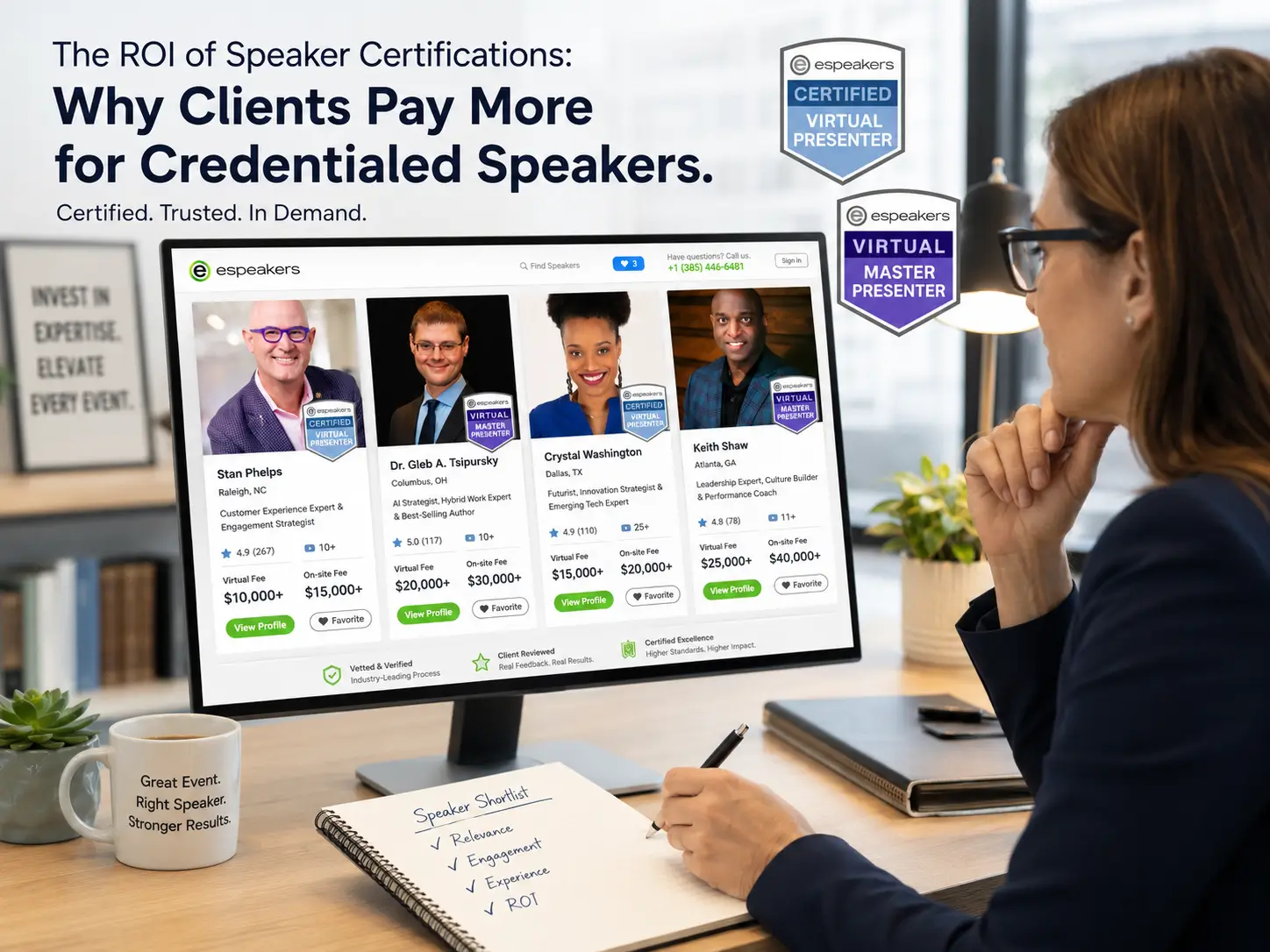
When a planner assembles a list of candidates for a booking, credentials function as an initial filter that reduces the field without requiring manual evaluation of every speaker. A planner who adds "CSP holder" to their search criteria on the eSpeakers Marketplace immediately narrows the candidate pool to speakers who have documented 250 paid presentations, served at least 100 different clients, maintained at least $50,000 annually in speaking income for five of the previous ten years, submitted to video review by NSA peers, and signed an ethics oath. Every one of those requirements represents a risk that has already been evaluated and verified by someone other than the planner.
A planner who adds "CVP certified" to a virtual speaker search narrows the field to speakers whose equipment, environment, and platform competence have been assessed live, on camera, by a trained evaluator, producing a proof video that the planner can watch before any discovery call happens.
In both cases, the credential hasn't sold the planner on the speaker. It has reduced the due diligence the planner has to perform to get to a comfortable shortlist.
The Internal Approval Process
Most booking decisions in corporate environments are not made by a single person. A survey of meeting planners by PCMA found that fewer than 8% of respondents make booking decisions alone. The rest are presenting a recommendation to leadership, a committee, or a procurement team.
Credentials are the shortcut that makes the approval process faster and less contentious. "I'm recommending a Certified Speaking Professional for the keynote, here's what CSP means" is a materially different recommendation conversation than "I found this speaker on the internet and they seem really good." The credential gives the approver a framework for evaluating the risk without having to do their own due diligence. It converts what would otherwise be a judgment call ("I think this person is good") into something that reads more like a verified statement ("this person has been independently assessed by a recognized professional body and met specific documented criteria").
The Fee Justification
Planners who are advocating internally for a speaker fee also use credentials as evidence that the spend is justified. Some organizations have explicit policies that restrict speaker bookings to CSP-holders, not because the CSP guarantees an extraordinary speaker, but because it guarantees a professionally documented one. Others use credential status as an informal benchmark for budget approval: a $15,000 speaker with a CSP requires a different approval conversation than a $15,000 speaker with no verifiable professional credentials.
The CSP, in this context, is not just a signal to the planner. It is a signal that the planner can use to justify their recommendation to someone above them, and that function is worth something real to a planner whose professional credibility depends on their recommendations being defensible.
The Speaker Certification Landscape in 2026
Not all credentials are equal, and the ROI calculation differs significantly across them. Here is a clear-eyed breakdown of the major credentials professional speakers currently pursue.
The CSP: The Industry's Highest Earned Bar
The Certified Speaking Professional (CSP), established by the National Speakers Association in 1980 and recognized by the Global Speakers Federation across 17 member associations worldwide, is the speaking profession’s highest-earned credential. It is not self-awarded, not purchased, and not a course completion certificate. It is a documented verification of a sustained professional speaking business.
What it requires: A minimum of 250 paid presentations within a five-year window. At least 100 different clients within that same period. Speaking income of at least $50,000 per year for five of the previous ten years. Evaluations submitted by at least 20 clients. A video submission reviewed by NSA peers, the most common reason for application denial, demonstrates current platform skills. Completion of ethics coursework and signing of an oath.
Who holds it: Approximately 17% of NSA members worldwide, and less than 12% of the 5,000+ speakers across all GSF member associations. The CSP is not a participation award. It is an exclusion mechanism, and the rigor of what it excludes is what makes it valuable.
What it signals to planners: That the speaker has delivered professionally at scale, served a broad client base, maintained sustained income that justifies the description “professional,” satisfied client evaluations at a meaningful sample size, and met an ethical standard verified by peers. In planner terms: documented track record, verified client satisfaction, ethical commitment.
The business implication: Some organizations hire only CSP speakers. Not because the CSP certifies content quality, it explicitly doesn’t, but because the CSP certifies the professionalism infrastructure around content delivery. The speaker will show up. The speaker will customize appropriately. The speaker will be professional in every interaction that surrounds the stage time. For a planner recommending a speaker to their CEO’s annual all-hands, that infrastructure guarantee is worth paying for.
The CPAE: The Hall of Fame
The Council of Peers Award for Excellence (CPAE), established in 1977, is NSA’s Speaker Hall of Fame. It is a lifetime designation evaluated by peers across seven categories: material, style, experience, delivery, image, professionalism, and communication. It is not based on celebrity, volume, or income. Fewer than 300 speakers have received it since its establishment.
The CPAE is not a credential that speakers pursue the way they pursue the CSP. It is conferred by election, not application, in the conventional sense. But its presence in a speaker’s bio, “NSA Hall of Fame Speaker”, carries meaningful weight with planners who recognize it, because the evaluation criteria specifically assess the qualities that determine whether a speaker will deliver an exceptional experience, not just a professional one.
The Global Speaking Fellow
The Global Speaking Fellow designation is conferred by GSF member associations and recognizes speakers who have sustained a successful speaking business across multiple countries, cultures, and economies. It requires the CSP (or equivalent) as a prerequisite and documents international professional competence. For speakers who work internationally, or aspire to, it is the credential that gives international planners the same risk-reduction benefit that the CSP gives domestic ones.
The CVP: The Virtual Baseline
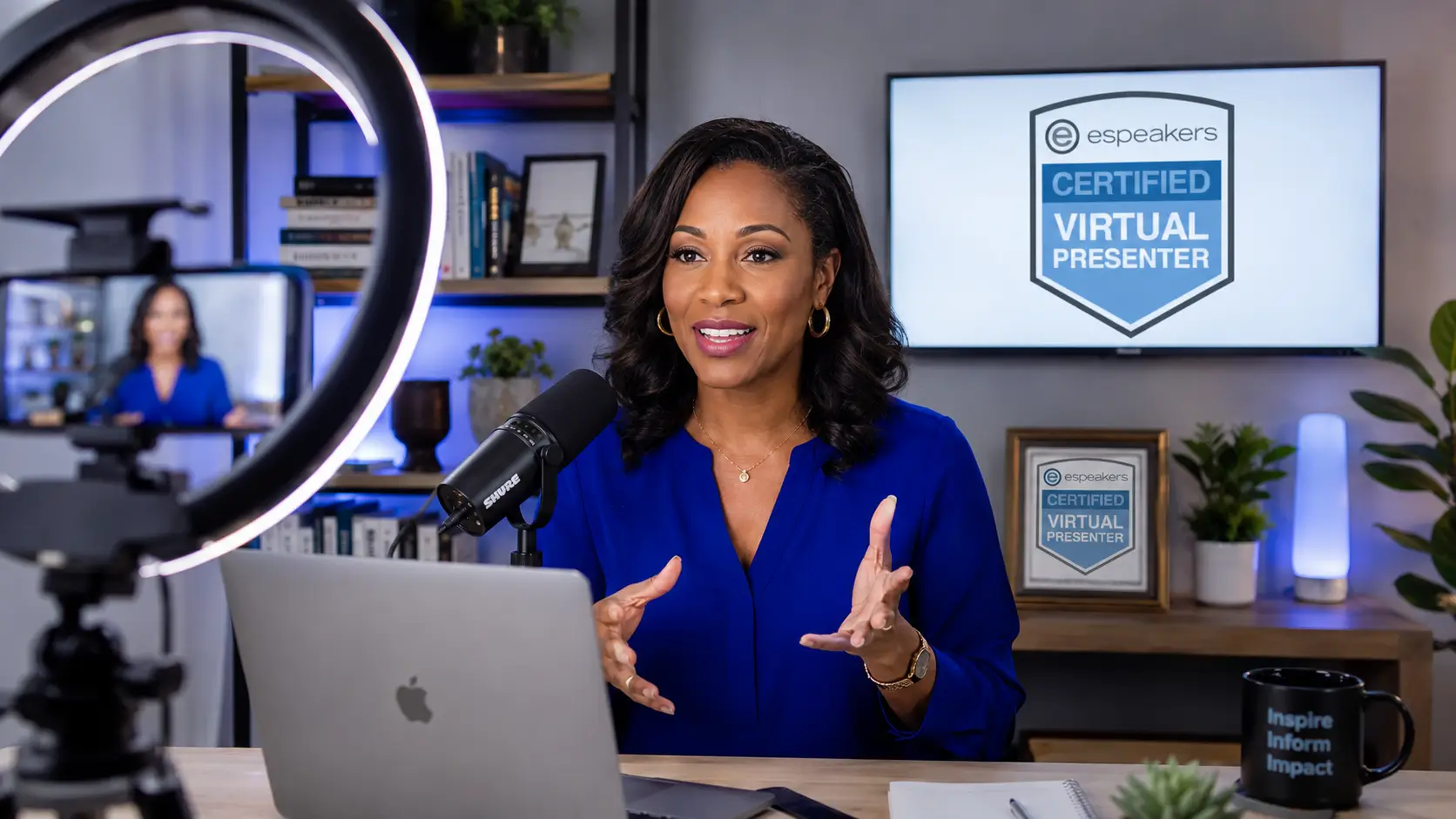
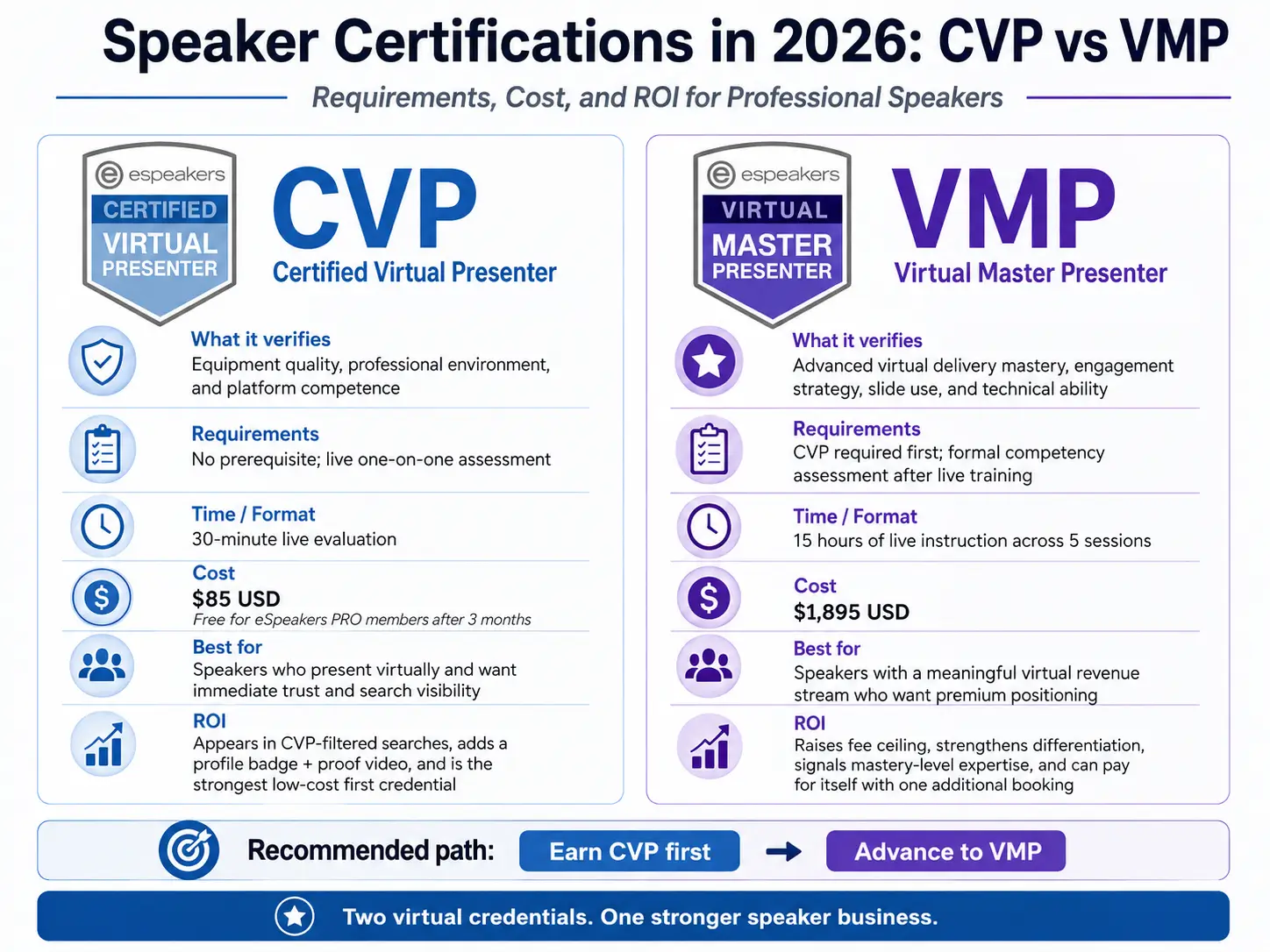
The Certified Virtual Presenter (CVP), administered by eSpeakers, is the baseline verification for virtual delivery readiness. A 30-minute live assessment tests equipment, environment, and platform competence. Recognized by MPI, SMART Meetings, and SPIN, organizations whose members are the planners booking virtual speakers.
Fee: $85 (free for eSpeakers PRO members with 3+ months of membership).
The CVP’s ROI calculation is the most direct in the credential landscape. It costs almost nothing for PRO members, takes thirty minutes, produces a permanent badge on the eSpeakers profile, and enables a searchable filter that removes from consideration every speaker who hasn’t verified their virtual readiness. In a marketplace where planners are making fast decisions from a filtered list, the CVP is the credential that keeps you on the list that gets evaluated.
The VMP: The Virtual Mastery Credential
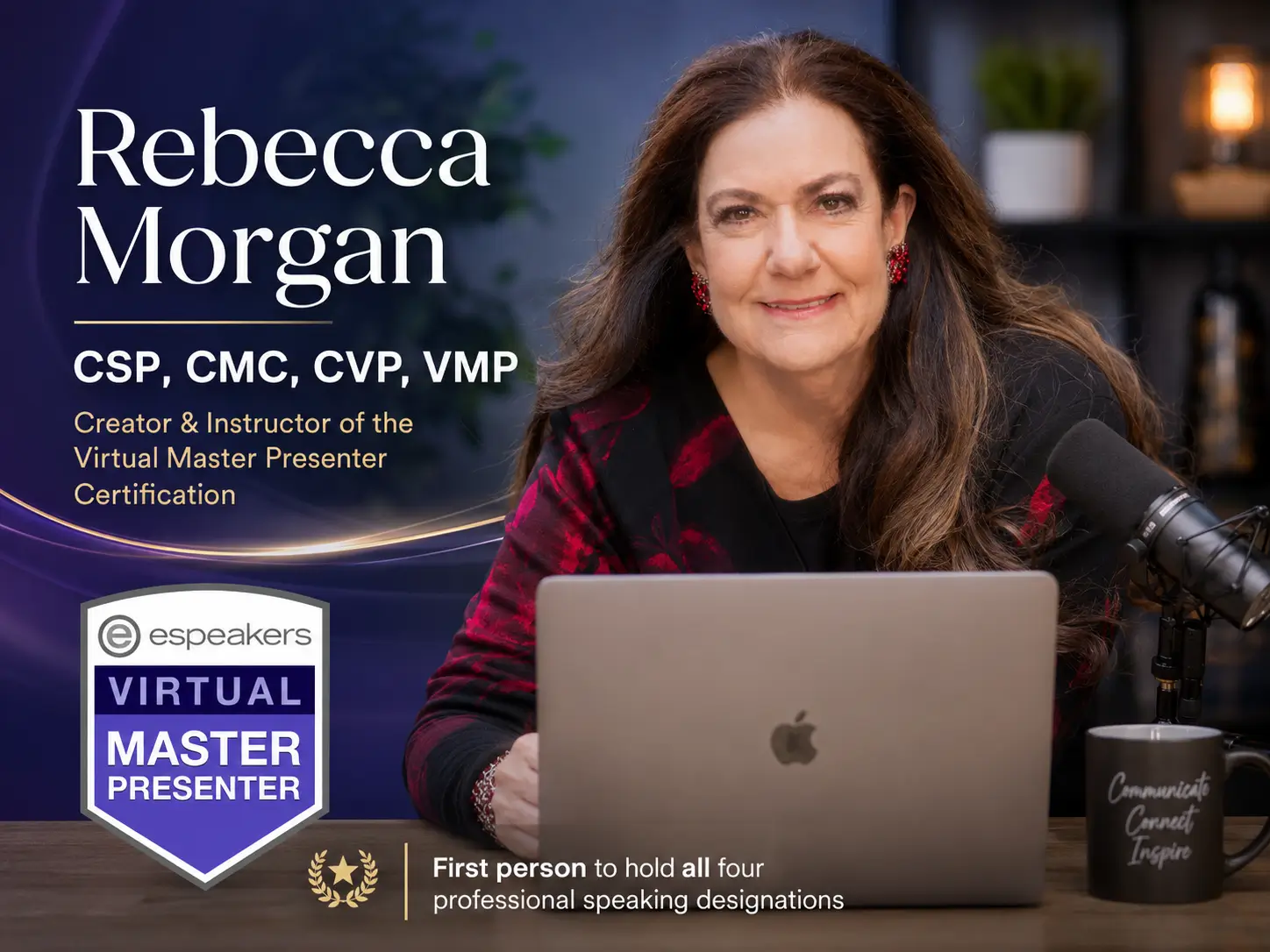
The Virtual Master Presenter (VMP), created by Rebecca Morgan and administered through eSpeakers, is the advanced designation for virtual delivery. Fifteen hours of live instruction across five sessions, a formal competency assessment in five domains (AV setup, virtual delivery, engagement, slide design and use, technical ability), and a small global pool of holders.
Fee: $1,895 (requires CVP as a prerequisite).
The VMP’s ROI case is covered in detail in the previous article in this series. The short version for this context: the VMP is the credential that separates speakers who are technically capable of virtual delivery from those who are genuinely expert at it, and in a market where virtual delivery is a permanent and growing revenue stream, that separation is worth 15 hours and $1,895 in investment.
What Credentials Don't Do, And Why That Matters
The honest ROI conversation requires naming what credentials don’t do, because the gap between what they promise and what they guarantee is where unrealistic expectations get set.
Credentials don’t certify content quality. Dave Reed, President of eSpeakers, was explicit about the CVP: “The certificate does not speak to the presenter’s content, platform skills, experience, etc.” The same is true of the CSP; it certifies professional infrastructure and track record, not the quality or relevance of what a speaker says on stage. A planner who books a CSP speaker gets a verified professional. They don’t get a guarantee that the content will be transformative.
Credentials don’t replace relevance. No credential resolves the fundamental question of fit, whether this speaker’s topic, style, and perspective are right for this audience at this moment. A planner choosing between a CSP and a non-credentialed speaker who more precisely matches their audience’s needs will typically choose fit over credentials. Credentials help when all else is roughly equal. They don’t override a fundamental mismatch.
Credentials don’t replace a demo reel, testimonials, or a strong eSpeakers profile. In the context of a speaker’s full marketing presence, credentials are one element in a system. A CSP badge on a weak profile with no video, no testimonials, and no clear topic positioning still struggles to convert planners. The credential amplifies a strong profile. It doesn’t substitute for one.
Credentials don’t automatically raise your fee. They create the conditions in which raising your fee is justified and supportable. A speaker who earns the CSP and quotes the same fee as before has added a credential without extracting its value. The credential is a signal that something changed, and the fee should reflect that, or the signal goes to waste.
The Compounding ROI: How Credentials Build on Each Other
The most useful way to think about credential ROI is not as a one-time event but as a compounding effect that builds over a career. Each credential changes the baseline from which the next one builds.
The CVP changes the filter you appear in. Planners searching for virtual speakers who add the CVP filter to their eSpeakers search see your profile. Without it, they don’t. This is not a marginal improvement in visibility; it is the difference between appearing in a search result and not existing in it.
The VMP changes the quality signal in that filter. Among the CVP-certified speakers a planner finds, the VMP-holder stands out. The credential ladder on your profile, with both badges visible, communicates a clear progression: verified, then mastered. That’s a different story from any single credential alone.
The CSP changes the tier you’re evaluated in. A speaker building toward the CSP requirements, documenting presentations, building client breadth, and maintaining income documentation is simultaneously building the track record that justifies higher fees. The CSP application process is a forcing function for the business infrastructure that a serious speaking business needs anyway. The credential is the documented output of work that was worth doing, regardless.
The credential stack changes the recommendation conversation. A planner presenting a CVP + VMP + CSP speaker to leadership for approval is presenting a comprehensively documented professional, verified setup, verified mastery of virtual delivery, and verified sustained professional track record. Every credential removes a question that someone in that approval chain might otherwise raise.
The compounding effect means the ROI calculation should always be forward-looking, not just immediate. The question isn’t “what does this credential earn me next month?” It’s “What does this credential enable over the next five years of bookings, fee increases, and referrals?”
The eSpeakers Credential Ecosystem
For professional speakers building on the eSpeakers platform, which is where the directory presence, the eSEO ranking, and the HighLevel CRM integration live, the credentials administered by eSpeakers have an additional ROI dimension beyond the general market signal.
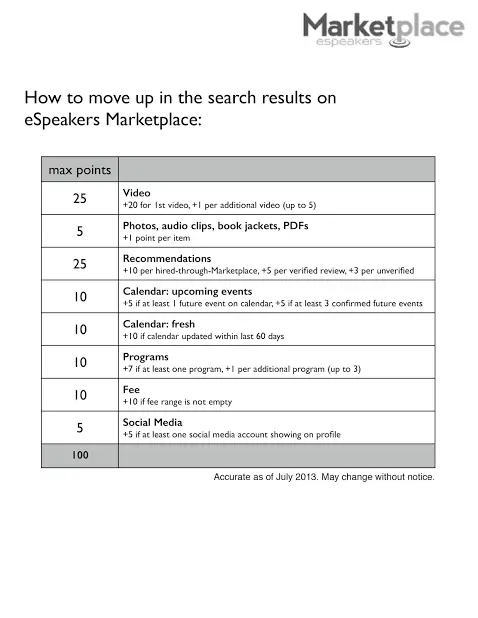
Both the CVP and VMP badges are automatically added to the eSpeakers profile upon earning. They contribute to eSEO score, the ranking algorithm that determines how you appear in Marketplace searches. They appear in profile views for every planner who looks you up. And the CVP specifically enables the "virtual presenter verified" filter that planners use when sourcing virtual speakers, making it not just a marketing asset but a searchable attribute that directly affects which searches you appear in.
This means the eSpeakers credential ecosystem has a closed-loop ROI: the credential earns the badge, the badge contributes to eSEO rank, the rank increases profile visibility, the visibility generates more inquiries, and the inquiries enter the HighLevel CRM pipeline, where the automation system converts them to bookings. The credential isn't just marketing material. It is a functional component of the discovery and conversion infrastructure.
For eSpeakers PRO members, this closed loop includes the CVP at zero incremental cost. A PRO member who hasn't earned the CVP has paid for a component of their credential infrastructure and hasn't collected it. That's a simple correction to make: 30 minutes, one assessment, permanent badge, meaningful profile improvement.
The Math: What a Single Additional Booking Produces
The credential ROI conversation often gets stuck at the level of qualitative benefit (“you’ll get more bookings”). Let’s make it concrete.
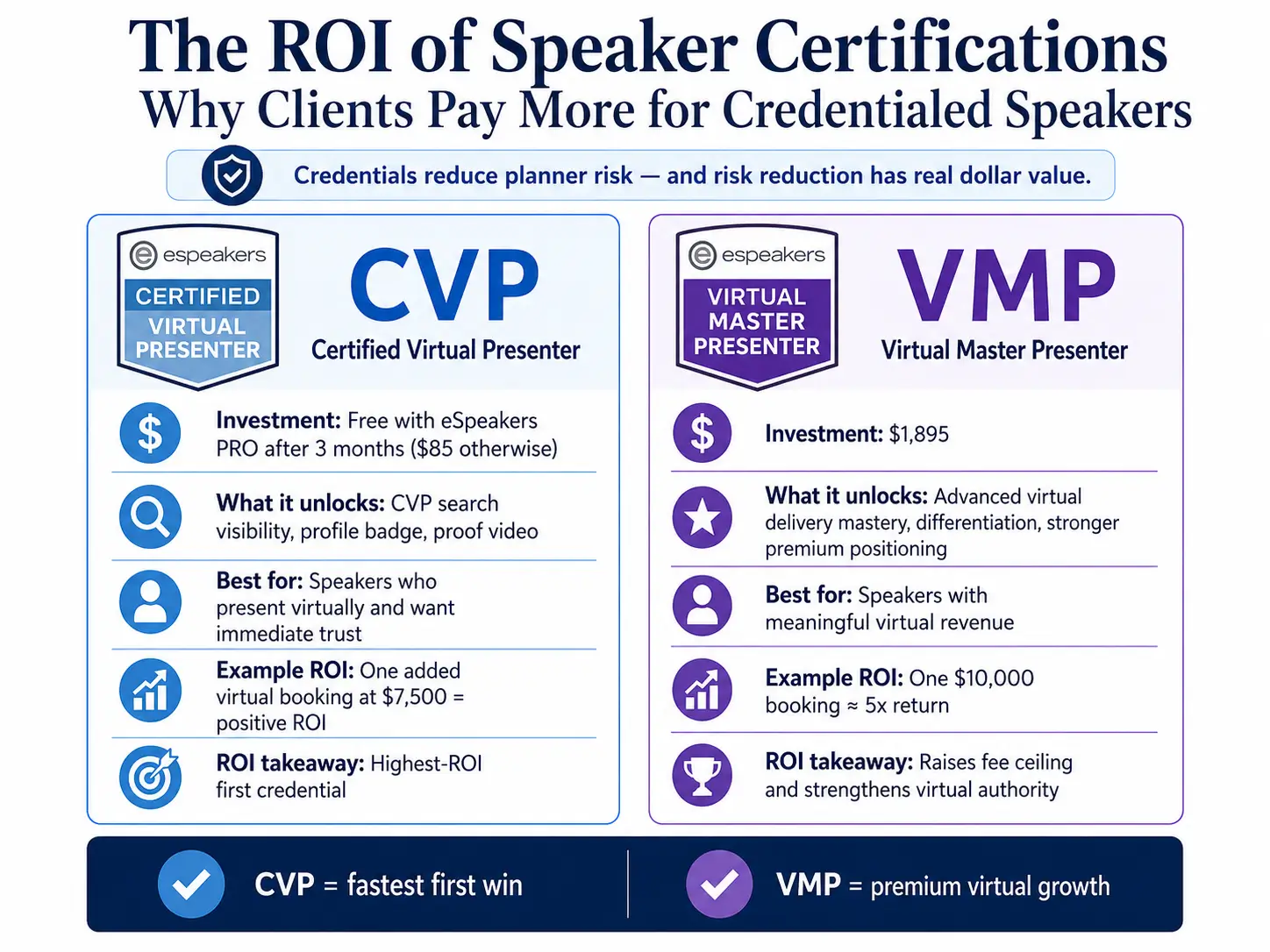
CVP (free for PRO members): At zero cost, the ROI threshold is any single additional booking that traces to the CVP credential or the virtual search visibility it enables. One virtual engagement at $7,500 generates $7,500 on a zero-cost credential. The math requires one additional booking in the lifetime of the credential to be positive.
VMP ($1,895): One additional booking at $10,000 for a speaker who commands that fee produces a 5x return on the credential investment. More importantly, the VMP's 15 hours of instruction raises the delivery quality floor of every virtual engagement going forward, producing better testimonials, higher repeat booking rates, and more referrals, each of which compounds beyond the single-booking math.
CSP (application fee + NSA membership, which varies): The CSP's ROI is less about individual bookings and more about tier access. The organizations that require CSP credentials represent a pool of bookings that are categorically unavailable to non-credentialed speakers. One booking in that pool, at the fee levels that tier commands, typically covers the credential costs many times over.
The comparison that matters is not credential cost versus immediate fee impact. It is credential cost versus the career-long delta between what a credentialed speaker at your career stage earns and what an uncredentialed one earns. That delta, accumulated over years of compounding bookings, fee increases, and tier access, is the real ROI number, and it is not a close comparison.
Where to Start: The Credential Sequence That Makes Sense
For speakers evaluating where to invest certification effort, the sequence matters as much as the destination.
Start with CVP if you present virtually at allprofile
The cost is essentially zero for PRO members, the time investment is 30 minutes, and the credential immediately improves both the discovery visibility and the profile conversion rate for virtual inquiries. There is no rational argument for a PRO member to defer this.
Add VMP when virtual is a meaningful revenue stream, and you're ready to invest in mastery
The 15 hours and $1,895 make sense when virtual engagements represent a significant portion of your income or when you want them to. The credential accelerates both the fee ceiling and the quality floor for everything you do virtually.
Work toward CSP as a medium-term career objective
The CSP requirements, 250 presentations, 100 clients, income documentation, and 5 years, are not achievable quickly by design. But the application process creates the discipline of tracking the metrics that matter for a professional speaking business: engagement count, client diversity, and income trajectory. Starting to document now, even if the application is years away, makes the path shorter than starting from scratch later.
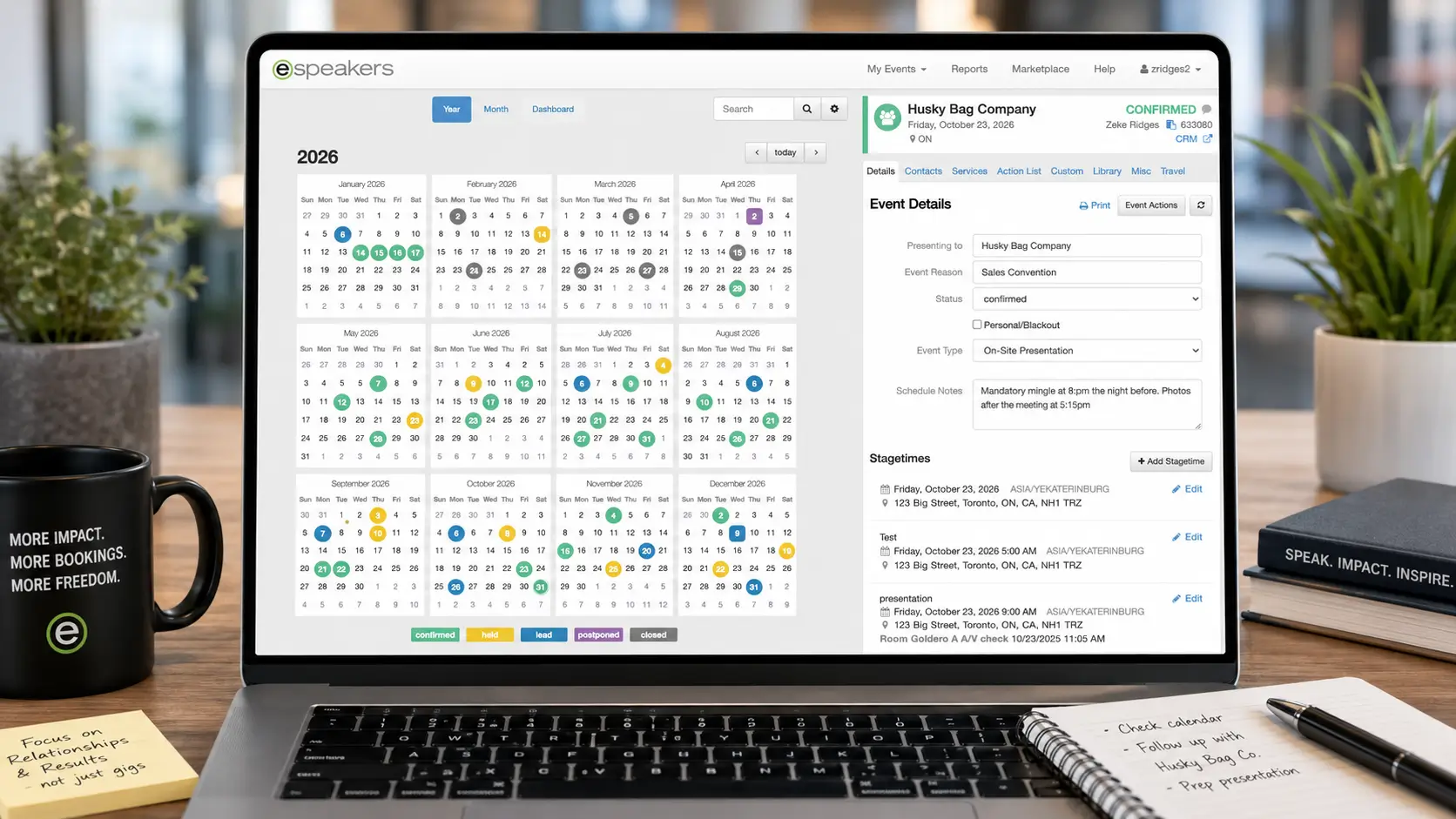
Use eSpeakers Calendar to track the metrics that credential applications require.
CSP applications need verified presentation counts, client records, and income documentation across a five-year window. HighLevel's pipeline and contact records, used consistently, produce exactly this data as a byproduct of managing your speaking business. The CRM is not just the booking machine; it is the documentation system that makes credential applications possible without rebuilding your business history from memory.
FAQ
No. The CSP guarantees that certain planners will include you in their shortlist who would otherwise filter you out, and that the internal approval process for your bookings will have one fewer friction point. Whether you convert those additional evaluations into bookings depends on everything else: your demo reel, your profile, your fee positioning, and your discovery call performance. The CSP changes your starting position in the booking process, not the outcome of every engagement.
Experienced planners, the ones most likely to be booking at premium fee levels, typically do. Novice planners or those in organizations that don’t frequently use professional speakers may not. But the credential functions even when a planner doesn’t recognize the specific acronym: it appears in a professional bio as “Certified Speaking Professional,” which reads as a formal designation regardless of whether the reader knows its specific requirements. The letters CSP after a name communicate “credentialed professional” even to planners who don’t know the National Speakers Association.
CVP immediately (free with eSpeakers PRO, 30 minutes). VMP when virtual is a meaningful part of your business. In parallel, start building the documentation habits, tracking presentation counts, client records, and income, that will make a CSP application possible when you reach the qualifying threshold. The CSP is a five-year credential in the sense that the qualification window spans five years; the time to start building the record is the day you decide it’s a goal, not the day you apply.
You can raise your fee when you decide your market position supports it, and a newly earned credential is a legitimate justification for that. The credential creates the argument; you still have to make it. Update your profile, update your website, update your outbound pitch language, and quote the new rate consistently. The credential supports the fee change, but it doesn’t automatically implement it.
They serve different functions and complement rather than compete with each other. The CSP verifies professional speaking track record, business, and performance history. The CVP and VMP verify virtual delivery competency, the technical and craft elements specific to the medium. A speaker with all three has documented both their professional history and their format-specific mastery. In a market where virtual delivery is a permanent and growing component of a professional speaking business, that combination represents the most comprehensive credential stack currently available.
Credentials Are Infrastructure, Not Decoration
The speakers who treat certifications as résumé decorations, something to add to a bio and then forget, get résumé-level ROI: marginal, hard to measure, eventually forgettable.
The speakers who treat credentials as infrastructure components, integrated into their eSpeakers profile, present in their outbound email copy, surfaced in their HighLevel follow-up sequences, visible on their website, and in their email signature, get infrastructure-level ROI: compounding, systematized, and continuously generating the risk-reduction benefit that makes planners willing to pay a premium.
The mechanism isn’t mysterious. Planners pay more for credentialed speakers because credentials reduce the planner’s professional risk. Risk reduction has a dollar value. The dollar value is what makes credentials worth pursuing, worth deploying, and worth connecting to the marketing and CRM system that converts planner confidence into confirmed bookings.
The CVP is the first step, and for eSpeakers PRO members, it’s a free one. The rest of the credential stack builds from there.
Start your eSpeakers PRO 60-day trial →
Your eSpeakers PRO membership includes the CVP certification assessment at no additional cost after three months, a searchable directory profile where your credentials are visible to planners actively sourcing speakers, and the HighLevel CRM integration that routes every credential-driven inquiry directly into your booking pipeline.
Joe Heaps, Chief Marketing Officer at eSpeakers
Joe Heaps is the Chief Marketing Officer at eSpeakers and is responsible for creating and accelerating the company's sales & marketing strategies. He is focused on driving the company's vision of helping organizations and individuals improve in substantial, long-term ways. He believes it happens when the perfect speaker is in front of the right audience. Over 25 years in the industry, Joe’s strategic vision and leadership have propelled eSpeakers to the leading software platform for speakers, coaches, and experts.
Joe Heaps
Chief Marketing Officer, eSpeakers
Latest Articles


Related Articles